

For aspiring homeowners and seasoned investors alike, the recent volatility in the UK property market has created a climate of understandable uncertainty, leaving many to question the right time to make a move. However, a significant and welcome shift is now underway as uk mortgage rates fall below 5%, presenting a potential window of opportunity for discerning buyers. This development signals a pivotal moment, but it also raises crucial questions about the best course of action for your personal property strategy.
Is now the optimal time to purchase or remortgage, or does prudence suggest waiting for further market adjustments? In this guide, we provide the clarity and strategic insight you need. We will demystify the economic factors driving this change, analyse the tangible impact on your buying power, and equip you with the expertise to plan your next property move with absolute confidence. Our mission is to ensure you can navigate this evolving landscape seamlessly, whether your focus is on a UK home or an international investment.
The Milestone Moment: Understanding Why UK Mortgage Rates Dropped Below 5%
For the first time in many months, prospective homebuyers and existing homeowners can approach the market with renewed confidence. The much-anticipated news is confirmed: average two and five-year fixed mortgage rates have now dipped below the significant 5% threshold. This development marks a pivotal moment, signalling a potential shift in the property landscape after a period of pronounced volatility. But what are the underlying forces driving this welcome change? The answer lies in a confluence of stabilising economic indicators, a strategic pause from the Bank of England, and intensifying competition among lenders.
Economic Factors at Play
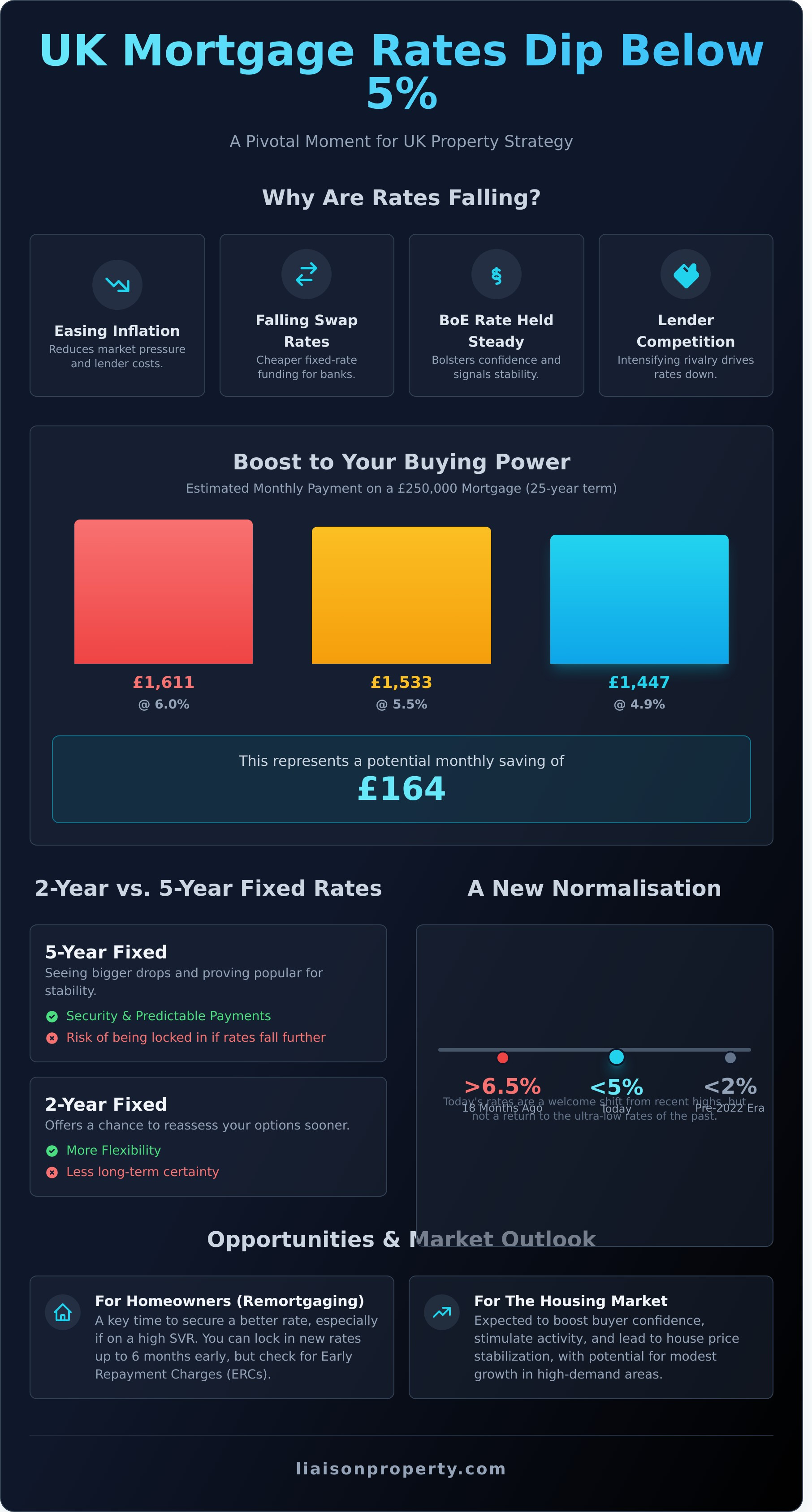
The primary driver behind this downward trend is easing inflation and its direct effect on ‘swap rates’. In simple terms, swap rates are the fixed interest rates that banks use to lend to each other, and they are a key indicator of where the market expects future interest rates to go. As inflation has begun to cool, these swap rates have fallen, reducing the cost for lenders to secure fixed-rate funding. This has allowed them to pass on savings to consumers. Furthermore, with the Bank of England holding the base rate steady, the market is now pricing in potential rate cuts later in the year, which further bolsters lender confidence to offer more competitive products.
Two-Year vs. Five-Year Fixed Rates: Which is Seeing Bigger Drops?
While rates are falling across the board, the most significant reductions have been seen in five-year fixed products. This reflects the market’s long-term optimism about economic stability. For borrowers, the choice between a shorter or longer term is a strategic one:
- Two-Year Fixed: Offers flexibility, allowing you to reassess your options sooner if rates continue to fall. However, it provides less long-term certainty.
- Five-Year Fixed: Provides security and predictable payments for a longer period, which is ideal for budgeting. The risk is being locked in if rates drop substantially further.
Currently, the appeal of locking in a sub-5% rate for five years is proving popular among those seeking stability after a turbulent period.
A Historical Perspective on UK Mortgage Rates
To fully appreciate this milestone, it’s essential to view it in context. Today’s rates are a world away from the highs of over 6.5% seen just 18 months ago, a period that created significant pressure on household finances. This recent volatility is a notable chapter in the history of the UK mortgage industry, which has seen dramatic shifts over the decades. However, it is equally important to manage expectations; we are not returning to the ultra-low, sub-2% rates of the pre-2022 era. The fact that uk mortgage rates fall below 5 is a welcome sign of normalisation, where ‘good’ is relative to the recent market, offering a more sustainable and predictable environment for your property strategy.
What Falling Rates Mean for Your Property Ambitions
The recent shift in the lending landscape is more than just a headline; it is a tangible development that directly influences your strategic property decisions. As reports from sources like Sky News confirm average mortgage rates have fallen below 5%, a new window of opportunity opens for aspiring buyers and existing homeowners alike. This change recalibrates affordability, enhances borrowing power, and injects a much-needed dose of confidence into the market.
The Impact on Homebuyers
For those looking to purchase property, this is a pivotal moment. A lower interest rate directly reduces your monthly repayments, which can significantly alter your budget and purchasing power. The difference of even a single percentage point is substantial over the life of a loan. Consider the monthly cost on a typical £250,000 mortgage over 25 years:
| Interest Rate | Estimated Monthly Payment | Monthly Saving (from 6%) |
|---|---|---|
| 6.0% | £1,611 | – |
| 5.5% | £1,533 | £78 |
| 4.9% | £1,447 | £164 |
This improved affordability means lenders may also be willing to offer you a larger loan. We strongly advise securing an updated ‘mortgage in principle’ to gain a clear, current understanding of your maximum borrowing capacity.
The Opportunity for Homeowners (Remortgaging)
If you are an existing homeowner, particularly one on a high Standard Variable Rate (SVR), this is the time for strategic action. Remortgaging could allow you to secure a more favourable fixed rate, providing stability and significant monthly savings. Many lenders permit you to lock in a new rate up to six months before your current deal expires, allowing you to act now to safeguard against future volatility. However, it is crucial to review your current terms for any Early Repayment Charges (ERCs) before proceeding.
Will This Reignite the UK Housing Market?
The psychological impact of falling rates cannot be overstated. This positive shift is expected to boost buyer confidence and stimulate transaction volumes throughout the year. While the high cost of living remains a moderating factor, the fact that uk mortgage rates fall below 5 provides critical relief on the single largest household expense. This improved sentiment may encourage more sellers to list their properties, creating a more balanced and active market. Experts anticipate this will lead to a stabilization of house prices, with potential for modest growth in high-demand areas.
Crafting Your Strategy: To Act Now or Wait?
The news that uk mortgage rates fall below 5 percent presents a significant opportunity, yet the decision to act is deeply personal and requires careful consideration. The central question for aspiring homeowners and existing property owners alike is whether to secure a favourable rate now or hold out in the hope of further reductions. Building a resilient property strategy means moving with confidence, not haste. This requires a balanced assessment of market dynamics against your unique financial circumstances.
A Decision Framework for First-Time Buyers
For those entering the property market, a sub-5% rate is an encouraging headline, but your strategy must be built on solid foundations. Your deposit size remains the most critical factor, directly influencing the loan-to-value (LTV) ratio and the competitiveness of the rates available to you. Beyond this, a candid evaluation of your job security and overall financial stability is paramount. A holistic perspective ensures your property ambitions align seamlessly with your long-term financial wellbeing.
A Checklist for Those Considering a Remortgage
If you are looking to remortgage, the current climate warrants a strategic review of your existing terms. With lenders competing fiercely, borrowers now have access to the widest choice of mortgages in nearly 20 years, making diligent comparison more critical than ever. Before proceeding, your checklist should include:
- Your Current Deal: Confirm your fixed-rate period’s end date and identify any potential Early Repayment Charges (ERCs).
- Market Comparison: Proactively research the best deals available today, not just from your current lender.
- True Cost Calculation: Factor in all associated costs, such as arrangement and valuation fees, to understand the true value of a new deal.
The Non-Negotiable Step: Partnering with a Professional
Navigating this landscape requires expertise. A whole-of-market mortgage broker acts as your dedicated partner, providing strategic guidance tailored to your goals. They offer access to exclusive deals not available directly to consumers and possess the industry knowledge to position your application for success. Their expertise is invaluable in transforming a complex decision into a clear, confident, and seamless process. At Liaison Property, we believe that informed decisions are the cornerstone of any successful property journey and always recommend our clients seek such independent, expert counsel.
A Global Lens: Putting the UK Market into Perspective
While the news that uk mortgage rates fall below 5% is a welcome development for domestic buyers, the strategic investor understands the value of a broader perspective. This positive shift in the UK market presents an opportune moment to assess your overall strategy. For those looking to build a truly resilient and diverse portfolio, looking beyond national borders is not just an alternative—it is a sophisticated approach to wealth management. A global outlook allows you to capitalise on different market cycles and unlock unique lifestyle and financial opportunities that a single market cannot offer.
Exploring Alternative Property Investment Climates
The UK property market is mature and established, often characterised by high entry costs and compressed rental yields. In contrast, select emerging luxury destinations like Egypt’s Red Sea offer a compelling proposition for growth. Markets such as El Gouna and Soma Bay present opportunities for significant capital appreciation, driven by a robust international tourism sector and ongoing infrastructure development. As uk mortgage rates fall below 5, re-evaluating where your capital can work hardest is crucial. Investing in a market with a different economic trajectory can provide a valuable hedge against fluctuations in a single economy.
The Tangible Benefits of an International Property
An overseas property delivers a unique blend of personal enjoyment and financial return. The advantages extend far beyond a simple investment, offering a more holistic value proposition that enriches both your lifestyle and your balance sheet.
- A Personal Retreat: Secure a private holiday destination for you and your family, creating lasting memories in a world-class location without the recurring cost and hassle of booking hotels.
- Rental Income Potential: Generate a consistent, high-yield revenue stream by letting your property in a high-demand tourism market, often in a currency that can strengthen your portfolio.
- True Asset Diversification: Mitigate risk by holding a tangible asset in a different currency and geographic market, protecting your wealth from localised economic or political volatility.
Your Partner in Global Property
Navigating an overseas property purchase demands specialist knowledge, local insight, and trusted guidance. At Liaison Property, we are more than agents; we are your dedicated partners in securing exceptional international real estate. Our expertise provides the confidence and clarity you need to invest seamlessly in premier destinations from El Gouna to Soma Bay. We manage the complexities with integrity and transparency, allowing you to focus solely on the rewards.
To discover how you can enhance your portfolio, explore our portfolio of international properties and begin your global property journey with a partner you can trust.
Your Strategic Advantage in a Changing Market
The recent development as uk mortgage rates fall below 5 represents a pivotal moment for the property market, creating a valuable window of opportunity for discerning buyers and investors. This shift provides renewed potential, but it does not signal a one-size-fits-all solution. The optimal strategy—whether to act decisively now or wait for further clarity—hinges entirely on your unique financial circumstances and long-term ambitions. Understanding this UK trend within the broader global economic context is therefore essential for making truly informed, confident decisions.
Navigating these market complexities requires a trusted advisor. At Liaison Property, we embrace a partnership approach to your property journey, offering bespoke guidance backed by our expertise in premier international property markets. From our curated portfolio of luxury homes to our commitment to seamless transactions, we ensure your strategy is both sophisticated and successful. Whether you’re planning a move in the UK or abroad, informed decisions are key. Speak with a Liaison Property partner today.
Frequently Asked Questions
Are UK mortgage rates expected to fall even further this year?
Forecasting future mortgage rates requires careful analysis of economic indicators, primarily the Bank of England’s stance on inflation. While some analysts predict further modest decreases this year, this is not guaranteed. A continued fall in inflation would create a more favourable environment for rate cuts. As your dedicated partners, we provide strategic guidance by monitoring these trends, empowering you to make informed decisions with confidence and clarity as the market evolves.
How much of a deposit do I need to get a mortgage rate below 5%?
To secure the most competitive rates, lenders typically require a substantial deposit, often 25% or more of the property’s value. While the news that uk mortgage rates fall below 5 is encouraging for all buyers, those with smaller deposits may face slightly higher rates. Your credit history and overall financial profile are also pivotal. A comprehensive assessment allows us to present your application in the strongest possible light, maximising your access to premium mortgage products.
Is it better to fix my mortgage for 2 or 5 years in the current climate?
Choosing between a 2-year and a 5-year fixed term is a key strategic decision based on your personal outlook and risk tolerance. A 2-year term offers flexibility, allowing you to reassess your position sooner if rates continue to fall. Conversely, a 5-year term provides stability and certainty in your monthly payments, insulating you from potential market volatility. We can help you model both scenarios to determine which aligns seamlessly with your long-term property goals.
What is the difference between the Bank of England base rate and my mortgage rate?
The Bank of England’s base rate is the foundational interest rate it charges commercial banks. Your mortgage rate, however, is a retail rate set by your lender. While heavily influenced by the base rate, it also incorporates the lender’s operational costs, their assessment of risk, and competitive market positioning. Understanding this distinction is crucial, as it explains why consumer mortgage rates do not always move in perfect synchronisation with Bank of England announcements.
Can I get a new mortgage offer if I already have one but rates have dropped?
Yes, it is often possible to secure a new mortgage offer if rates have decreased since your initial application. If you have not yet completed your property purchase, you can typically switch to a more favourable product. For homeowners already in a fixed-term mortgage, it is essential to weigh the savings from a new rate against any potential Early Repayment Charges (ERCs). Our expertise lies in conducting this cost-benefit analysis to ensure your decision is financially sound.
How does the UK’s economic outlook affect what mortgage I should choose?
The UK’s broader economic outlook, including inflation forecasts and employment stability, should be a central consideration in your mortgage strategy. In an uncertain economic climate, the security of a long-term fixed rate can provide invaluable peace of mind and budget predictability. If the outlook is positive with expectations of falling rates, a shorter-term fix might be more advantageous. Our role is to provide the expert analysis you need to align your mortgage choice with the prevailing economic landscape.