

The ambition to own a piece of the Lone Star State is as vast as its landscape. Yet, navigating the market for land for sale in Texas can feel overwhelming—a complex terrain of unfamiliar legalities, regional nuances, and specialized financing challenges. This uncertainty can often stand between a powerful vision and a sound investment.
This comprehensive guide is designed to serve as your dedicated partner, transforming apprehension into confidence. We are here to demystify the entire land-buying process, providing the clarity and strategic guidance needed for a seamless journey. You will learn to navigate everything from the critical details of mineral rights to the intricacies of securing financing, ensuring you can vet, select, and acquire your ideal property with a professional’s assurance. Let us equip you with the expertise to make your Texas land ownership a rewarding reality.
Why Invest in Texas Land? Understanding the Market and Opportunity
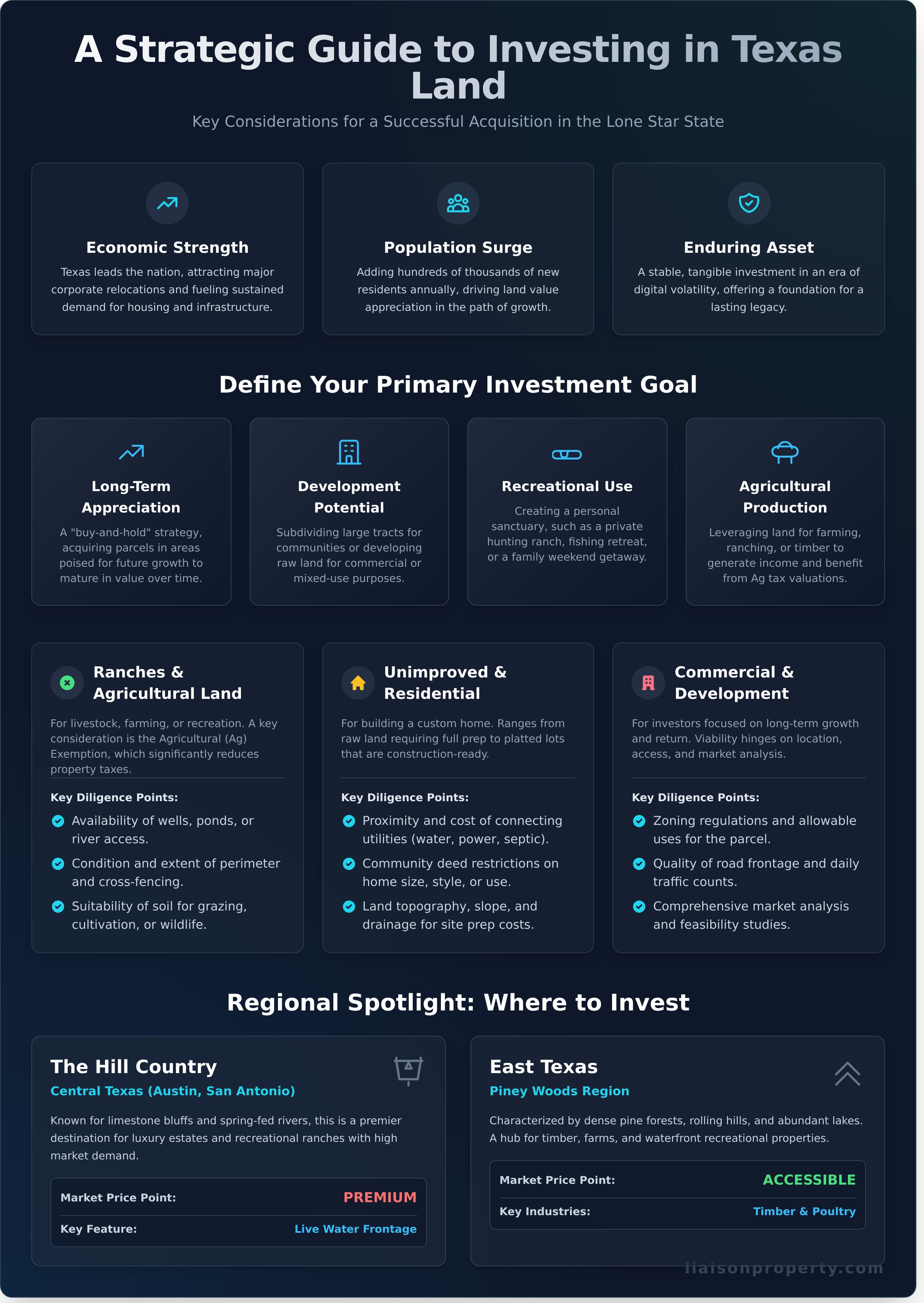
Investing in Texas land is more than a transaction; it is a strategic acquisition of a tangible, enduring asset. In an era of digital volatility, the appeal of owning a piece of the Lone Star State has never been stronger, driven by a powerful convergence of economic dynamism and demographic expansion. This section provides a foundational understanding of the key market drivers and diverse opportunities that make Texas a premier destination for land investors, builders, and lifestyle buyers alike. Acquiring property here is a step toward building a lasting legacy backed by one of the nation’s most robust economies.
Economic Growth and Population Trends
Texas continues to lead the nation in both economic strength and population growth, consistently adding hundreds of thousands of new residents annually. This surge is fueled by a business-friendly climate that attracts major corporate relocations, which in turn creates sustained demand for housing, commercial services, and infrastructure. The state’s vast and varied terrain, detailed in the comprehensive Geography of Texas, offers a unique canvas for this expansion. As new highways and utilities extend into developing areas, land values appreciate, rewarding those with the foresight to invest in the path of growth.
Types of Land Investment Goals
The immense diversity of the land for sale in texas accommodates a wide spectrum of investment objectives. Defining your primary goal is the critical first step toward a successful acquisition. Most buyers approach their search with one of these four strategic aims:
- Long-Term Appreciation: A buy-and-hold strategy centered on acquiring parcels in areas poised for future growth, allowing the asset to mature in value over time.
- Development Potential: For visionary investors, this involves subdividing larger tracts for residential communities or developing raw land for commercial, industrial, or mixed-use purposes.
- Recreational Use: Creating a personal sanctuary, such as a private hunting ranch, a fishing retreat, or a weekend getaway for the family to connect with nature.
- Agricultural Production: Leveraging the land for farming, ranching, or timber harvesting, generating income while benefiting from Texas’s favorable agricultural tax valuations.
Understanding these drivers and defining your purpose provides the confidence needed to navigate the market and identify a property that aligns perfectly with your financial and personal aspirations.
A Buyer’s Guide to Texas Land Types: From Ranches to Residential Lots
Navigating the diverse market for land for sale in Texas requires a clear understanding of the primary property categories available. Each type presents unique opportunities and demands specific considerations. Aligning your acquisition strategy with the correct land classification is the first step toward a seamless and successful investment. From sprawling ranches under wide-open skies to strategically located commercial parcels, identifying your objective is paramount.
Ranches and Agricultural Land
Texas ranch land generally falls into two categories: working ranches for livestock or farming and recreational ranches for hunting, fishing, and leisure. A key financial consideration is the Agricultural (Ag) Exemption, which can significantly reduce property taxes for land used primarily for agriculture. Diligence is crucial, focusing on:
- Water Sources: Availability of wells, ponds, or river access.
- Fencing: The condition and extent of perimeter and cross-fencing.
- Soil Quality: Its suitability for grazing, cultivation, or wildlife support.
Unimproved Land and Residential Lots
For those envisioning a custom home, the choice is often between raw, unimproved land and a platted lot within a subdivision. Raw land offers complete freedom but requires extensive preparation, including clearing, grading, and establishing utility connections. Platted lots are typically construction-ready with infrastructure in place. Essential factors include:
- Utility Access: Confirming the proximity and cost of connecting water, electricity, and septic systems.
- Deed Restrictions: Understanding any community rules governing home size, style, or use.
- Topography: Assessing the land’s slope and drainage to determine site preparation costs.
Commercial and Development Land
This category is for investors focused on long-term growth and return. The viability of commercial land hinges on factors like zoning regulations, road frontage, and daily traffic counts. A comprehensive market analysis is non-negotiable. Strategic investors analyze data from sources like the Texas Land Trends report to identify emerging opportunities in high-growth corridors, particularly along major transportation routes between cities like Austin, Dallas, and Houston. A feasibility study is often the final step to ensure a project’s financial success.
Navigating Key Regions: Where to Find Land for Sale in Texas
Texas’s sheer scale presents a diverse portfolio of land investment opportunities. To navigate the market with confidence, it is essential to understand the distinct character of its primary regions. Each area offers a unique combination of topography, culture, and economic drivers, profoundly influencing the types of land for sale in Texas and their corresponding value. Our expertise provides strategic guidance, ensuring you find the parcel that aligns perfectly with your vision.
The Hill Country (Central Texas)
Known for its breathtaking limestone bluffs and spring-fed rivers, the Hill Country is a premier destination for luxury estates and recreational ranches. Proximity to Austin and San Antonio creates high demand, making this one of Texas’s most competitive markets. Parcels with live water features—such as frontage on the Guadalupe or Frio Rivers—command premium prices, offering both aesthetic beauty and significant investment potential.
East Texas (Piney Woods)
Characterized by the dense “Piney Woods,” rolling hills, and abundant lakes, East Texas offers a different but equally compelling investment landscape. This region is a hub for timberland operations, poultry farms, and waterfront recreational properties. Generally, land prices here are more accessible compared to Central Texas, providing excellent opportunities for buyers seeking productive land or a tranquil retreat without the premium cost.
West Texas and Panhandle
This region embodies the classic Texas image of vast, open spaces under an expansive sky. The market is dominated by large-scale agricultural and ranching operations. However, the true value often lies beneath the surface; securing mineral rights is a critical consideration in this oil-rich territory. Additionally, opportunities for wind energy leases and world-class hunting tracts make this a landscape for strategic, long-term investment.
Gulf Coast and South Texas
From coastal prairies to the dense brush country, this diverse region supports everything from productive farmland to world-renowned hunting ranches. When considering coastal properties, due diligence on elevation and flood zones is non-negotiable. The unique ecosystem here supports a rich variety of wildlife, and many landowners work closely with the Texas Parks and Wildlife Department on habitat conservation. This blend of agriculture, recreation, and coastal living defines the South Texas land market.
The Step-by-Step Process for Acquiring Texas Land
Navigating the acquisition of property can feel complex, but a structured approach ensures a seamless and confident journey. This guide demystifies the process of purchasing land for sale in Texas, transforming your vision into a tangible asset. By partnering with dedicated professionals and following a clear path, you can secure your ideal property with integrity and precision.
Step 1: Defining Your Goals and Securing Financing
Clarity is the cornerstone of a successful purchase. Begin by creating a detailed list of your requirements: intended use, desired acreage, and essential features like water access or road frontage. Concurrently, secure pre-approval for a land loan. This critical step not only validates your purchasing power but also establishes a firm budget, allowing you to focus your search on viable properties and negotiate from a position of strength.
Step 2: Finding a Specialist and Identifying Properties
Your most valuable partner in this stage is a real estate agent specializing in land transactions. Their bespoke expertise provides access to market insights and off-market deals unavailable on public portals. While online listings are a useful starting point, your agent’s network is invaluable. Always physically inspect promising properties; walk the boundaries, assess the topography, and envision how the land will serve your long-term goals.
Step 3: Making an Offer and Navigating Due Diligence
Once you identify the perfect parcel, your agent will help structure a competitive offer, outlining price, contingencies, and key dates. A crucial component of the contract is the option period—a negotiated timeframe dedicated to due diligence. This is your opportunity to work with trusted professionals to conduct essential inspections and verifications, ensuring a transparent and secure transaction before closing.
To maintain organization, we recommend following this checklist:
- Define your land requirements and establish a firm budget.
- Obtain pre-approval for financing from a reputable lender.
- Engage a qualified real estate agent who specializes in land.
- Conduct thorough on-site inspections of potential properties.
- Submit a formal, well-structured offer through your agent.
- Complete all due diligence, including surveys and title searches.
- Finalize the transaction at closing with the title company.
Crucial Due Diligence: What to Investigate Before You Buy
Once you have identified a promising property, the due diligence phase begins. This is the most critical stage of buying land for sale in texas, where meticulous investigation protects your investment from unforeseen complications. A thorough review of legal documents and physical characteristics ensures the land is not only suitable for your vision but also a secure asset. This process transforms a potential purchase into a confident acquisition.
Title, Survey, and Access
Verifying clear ownership is paramount. A title commitment, provided by a title company, reveals the legal owner and exposes any liens, claims, or encumbrances against the property. We strongly advise obtaining a new survey, as it definitively marks your boundaries, identifies easements (e.g., for utility access), and prevents future disputes with neighbors. Crucially, confirm both legal and physical access. A property without a deeded, legal right of way is considered landlocked, severely limiting its value and use.
Zoning, Restrictions, and Utilities
Your intended use for the land must align with local regulations. Contact the county or city planning department to confirm the property’s zoning classification (e.g., agricultural, residential) and learn about any building restrictions. Additionally, review the deed for private restrictions, which can dictate everything from building size to land use. Investigating utilities is a vital budgetary step. You must determine the availability and cost of connecting to essential services:
- Electricity: How far is the nearest power line?
- Water: Is city water available, or will you need to drill a well?
- Sewer: Can you connect to a sewer system, or is a septic system required?
Mineral, Water, and Surface Rights
In Texas, the ownership of minerals (like oil and gas) can be severed from the surface land. It is essential to determine if the mineral rights convey with the property. If a separate party owns them, they may have the legal right to access your land for exploration and extraction. Water rights are similarly complex. While landowners typically own the groundwater beneath their property (subject to local district rules), rights to surface water from rivers or lakes are controlled by the state. Understanding these distinctions is fundamental to owning rural land in Texas.
Navigating these details requires expertise and diligence. Our team of seasoned professionals provides the strategic guidance needed to manage this process seamlessly, ensuring you can proceed with complete confidence. To learn more about our bespoke services, we invite you to get in touch with us today.
Financing Your Texas Land Purchase: Options and Strategies
Securing financing for undeveloped land presents a different set of challenges compared to a traditional home mortgage. Lenders often view raw land as a speculative investment, which requires buyers to present a more robust financial profile. However, with strategic preparation and a clear understanding of the available avenues, you can approach the financing process with confidence and position yourself for success.
Traditional Lenders and Farm Credit
Your financing journey should begin with local banks and credit unions. These institutions possess invaluable knowledge of the regional market and are often more willing to finance local land deals. For rural or agricultural tracts, specialized lenders like the Texas Farm Credit system are an exceptional resource. They exist specifically to fund these types of purchases. Expect stricter requirements, including a down payment of 20-50% and slightly higher interest rates than a conventional mortgage.
Seller Financing and Alternative Options
An increasingly popular route is seller financing, where you create a direct lending agreement with the property owner. This can offer greater flexibility on terms, down payments, and closing timelines, creating a mutually beneficial arrangement. Other sophisticated strategies include forming a partnership to pool capital or utilizing a self-directed IRA. Of course, a cash purchase provides the most significant negotiating power and simplifies the transaction, making it the preferred method for those with the available liquidity.
To present the strongest possible application to any lender when exploring land for sale in Texas, we recommend focusing on these key areas:
- A Clear Vision: Present a detailed plan for the property, whether for construction, recreation, or agricultural use.
- Excellent Credit: A high credit score is non-negotiable and demonstrates financial reliability.
- Substantial Down Payment: A larger down payment reduces the lender’s risk and shows your commitment.
- Low Debt-to-Income Ratio: Lenders need to see that you can comfortably manage the new loan payments.
Navigating these financial options requires diligence and expertise. As your dedicated partners, we provide the strategic guidance needed for a seamless transaction. Contact Liaison Property to ensure your purchase of land for sale in Texas is built on a solid financial foundation.
Securing Your Piece of the Lone Star State
Acquiring property in the Lone Star State is a significant endeavor, one that begins with a clear understanding of market opportunities and a commitment to meticulous due diligence. From navigating diverse land types to securing the right financing, the path to ownership is detailed, but the reward—a piece of Texas to call your own—is unparalleled. Your search for land for sale in texas is the first step on this exciting journey, but you do not have to navigate its complexities alone.
To ensure a seamless and successful acquisition, a dedicated partner is invaluable. We provide bespoke client services tailored to your unique goals, offering expert guidance through complex negotiations and due diligence. Our commitment is to ensure your transaction is handled with integrity and transparency, allowing you to move forward with confidence. Schedule Your Consultation and let us help you build your Texas legacy.
Frequently Asked Questions About Buying Land in Texas
How much does an acre of land cost in Texas?
The price per acre for land for sale in Texas varies significantly based on location, access, and intended use. In remote West Texas regions, prices may be a few thousand dollars per acre. Conversely, land near major metropolitan areas like Austin or Dallas can command tens of thousands per acre or more. Primary factors influencing value include road frontage, availability of utilities, water features, and topography. A detailed market analysis is essential for an accurate valuation.
Can a non-US citizen buy land in Texas?
Yes, Texas law generally permits non-US citizens to purchase and own real estate. There are very few restrictions on foreign ownership of land within the state. However, federal regulations, such as the Agricultural Foreign Investment Disclosure Act (AFIDA), may require reporting the acquisition. To ensure a seamless and compliant transaction, it is always prudent to seek strategic guidance from a qualified real estate attorney who specializes in international investment.
What is an agricultural (ag) exemption and how do I qualify?
An agricultural exemption is a special property valuation, not a true tax exemption. It allows land to be taxed based on its agricultural productivity rather than its market value, often resulting in a substantial tax reduction. To qualify, the land’s principal use must be for genuine agricultural purposes, such as farming or ranching, and must meet the county appraisal district’s specific intensity and history-of-use requirements. This typically involves using the land for agriculture for five of the preceding seven years.
What are the typical property taxes on Texas land?
Texas does not have a state property tax; all property taxes are assessed and collected at the local level by counties, cities, and school districts. Annual tax rates are a percentage of the land’s appraised value and typically range from 1.5% to over 3%, depending on the specific location. An agricultural or wildlife management valuation can significantly lower this tax liability. It is critical to investigate the combined tax rates for the specific jurisdictions where the property is located.
What are mineral rights and why are they so important in Texas?
In Texas, mineral rights—the ownership of subsurface resources like oil and gas—can be legally separated from surface rights. These rights are exceptionally valuable and allow the owner to explore and extract resources, which may involve accessing the surface of the property. When purchasing land, it is imperative to determine who owns the mineral rights. Securing them with your purchase provides complete control over your property and any potential revenue from its resources.
How difficult is it to get utilities like water and electricity to raw land?
The complexity of establishing utilities on raw land depends entirely on its proximity to existing infrastructure. Parcels near established communities may have straightforward access, while remote properties can require a significant investment to extend power lines or drill a water well. A thorough due diligence process is vital to determine feasibility and potential costs. Engaging with local utility providers and well-drilling companies early will provide clarity and help you budget accordingly.
What is the difference between a land surveyor and a land appraiser?
These two professionals serve distinct but equally vital roles. A land surveyor is responsible for defining the precise legal boundaries, easements, and physical characteristics of a property, creating a legally recognized map. In contrast, a land appraiser provides an expert, data-backed opinion of the property’s market value. The surveyor’s work defines what you own, while the appraiser’s work determines what it is worth, both of which are foundational for a secure investment.